
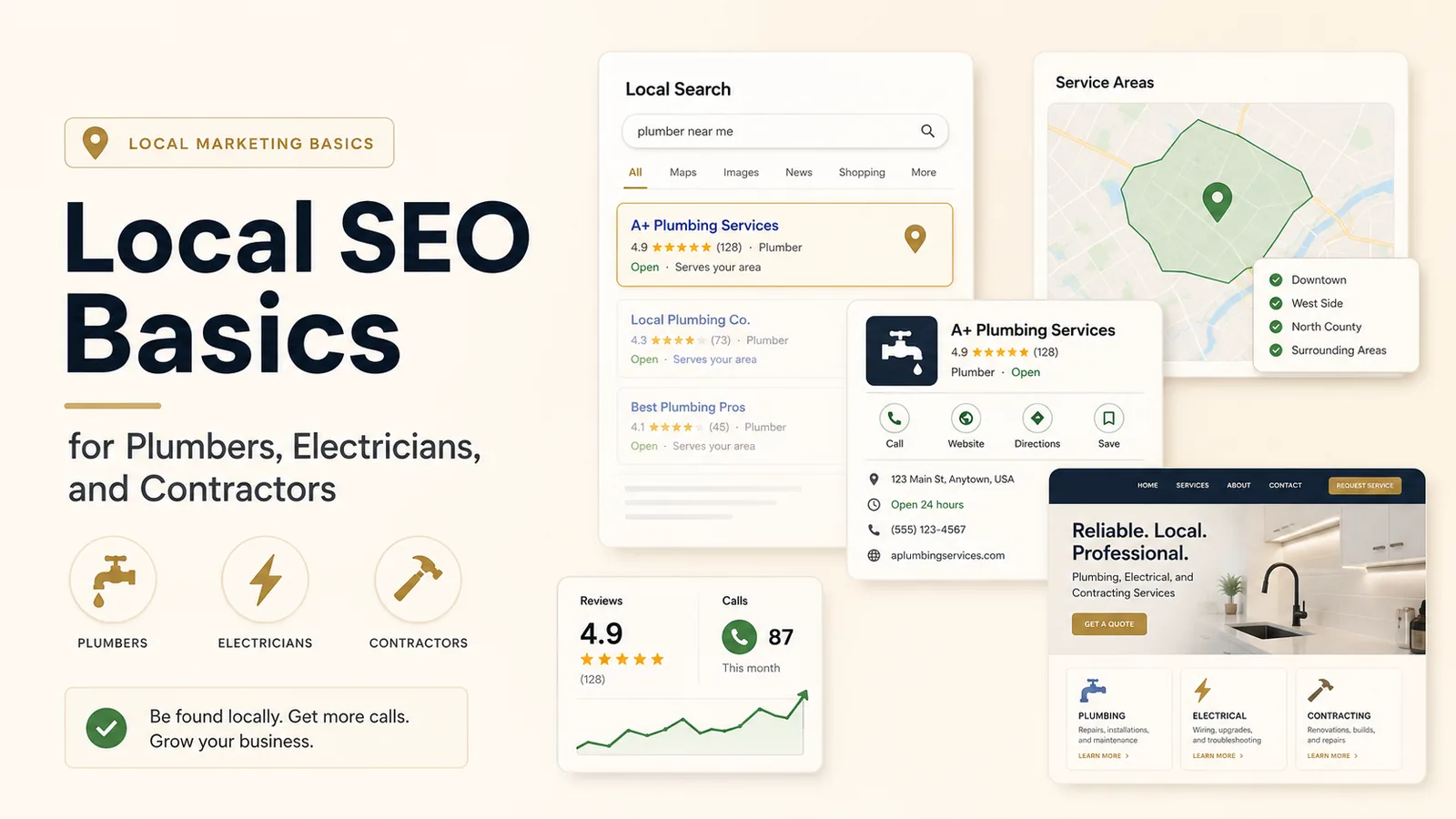
Local SEO is the process of improving how a business appears when nearby customers search for its services.
For trade businesses, those searches may include:
- Plumber near me
- Electrician in Edison
- AC repair Central New Jersey
- Roofer near Woodbridge
- Bathroom contractor in Middlesex County
The goal is not simply to attract more website traffic. The goal is to appear in front of local customers who need the services the business actually provides.
Local SEO is not one trick. It is a combination of website quality, business information, reviews, content, reputation, and consistency.
Start with accurate business information
Your business name, address, phone number, hours, and service information should be accurate wherever the company appears online.
Important places include:
- Your website
- Google Business Profile
- Bing Places
- Major business directories
- Trade associations
- Social profiles
- Local chamber listings
Inconsistent information can confuse customers.
If the company is a service-area business that does not receive customers at a storefront, follow the platform’s rules for displaying or hiding the address.
Build a useful website
A website gives search engines structured information about the business.
It should clearly explain:
- Services
- Service areas
- Company background
- Contact details
- Reviews
- Project examples
- Business hours
- Emergency availability
- Credentials
A one-page website can work for a small company, but individual service pages usually provide more useful information.
Create pages for important services
Do not place every service in one short list and expect customers to understand the business.
A plumber may need pages for drain cleaning, water heaters, leaks, and sewer work. An electrician may need pages for panels, EV chargers, generators, and repairs. A roofer may need pages for repairs, replacement, and storm damage.
Each page should answer real customer questions.
Useful topics include:
- What the service includes
- Common signs the service may be needed
- Types of systems or properties handled
- What the process looks like
- Service area
- How to request an estimate
Avoid stuffing the same city names and keywords into every paragraph.
Use location information naturally
The website should identify the actual service area.
A clear service-area page may list:
- Main towns
- Counties
- Regions
- Travel radius
- Residential or commercial coverage
Location pages can be useful when they contain unique information. Thin pages that repeat the same content with only the city name changed provide little value to customers.
Write for people first.
Optimize your Google Business Profile
A complete profile can help customers find and evaluate the company.
Review:
- Primary and secondary categories
- Business description
- Services
- Hours
- Service area
- Phone number
- Website link
- Photos
- Appointment links
- Questions and answers
Keep information current.
Add real photos regularly, especially project photos, team photos, vehicles, and completed work.
Ask for legitimate reviews
Reviews influence customer trust and local visibility.
Create a simple process for requesting reviews after completed work.
Good moments include:
- After the customer confirms satisfaction
- After final walkthrough
- After a successful repair
- After payment
- After resolving a follow-up issue
Do not offer misleading incentives or create fake reviews.
Respond professionally to both positive and negative feedback.
Publish helpful content
Blog posts are not required for every local business, but useful content can support service pages and answer customer questions.
Examples:
- Signs a water heater may need replacement
- What to do when a breaker keeps tripping
- How to prepare for an HVAC estimate
- Questions to ask a roofing contractor
- Repair versus replacement considerations
- Seasonal maintenance checklists
The content should be accurate, practical, and connected to services the company provides.
Improve technical basics
A technically sound website helps search engines access and understand the content.
Important basics include:
- Mobile-friendly design
- Fast loading
- Secure HTTPS
- Clear page titles
- Useful meta descriptions
- Logical heading structure
- Descriptive URLs
- Internal links
- Image alt text
- XML sitemap
- Proper redirects
- No broken pages
- No accidental noindex tags
Technical SEO does not replace strong content, but technical problems can prevent good content from performing.
Use internal links
Pages should connect naturally.
A general plumbing services page can link to drain cleaning, water heater repair, and leak detection. A blog post about furnace warning signs can link to the furnace repair page. A service-area page can link to major services.
Internal links help customers navigate and help search engines understand relationships between pages.
Earn relevant local links
Backlinks are links from other websites to yours.
Relevant opportunities may include:
- Local chambers
- Trade associations
- Suppliers
- Community organizations
- Sponsorships
- Referral partners
- Local news
- Client or builder partner pages
- Professional directories
Quality and relevance matter more than volume.
Avoid buying large packages of low-quality links.
Track leads, not only rankings
Rankings can change by location, device, and search context.
Track actions that matter:
- Calls from the website
- Form submissions
- Booking requests
- Direction requests
- Google Business Profile actions
- Visits to key service pages
- Conversion rate by device
The goal is business growth, not a screenshot of one keyword position.
Be patient and consistent
Local SEO usually improves through ongoing work.
The timeline depends on:
- Competition
- Market size
- Business history
- Reviews
- Website quality
- Existing reputation
- Content
- Technical condition
- Local links
No legitimate provider can guarantee a specific ranking.
Focus on building a useful, trustworthy presence.
Avoid common local SEO mistakes
- Creating duplicate city pages
- Using fake addresses
- Buying reviews
- Keyword stuffing
- Hiding phone numbers
- Ignoring mobile users
- Letting business information become outdated
- Publishing generic AI content without review
- Using fake project photos
- Buying spammy backlinks
- Tracking traffic without tracking leads
Shortcuts can damage trust.
A practical local SEO priority list
Start with:
- Accurate Google Business Profile
- Professional website
- Clear service pages
- Service-area information
- Review request process
- Fast mobile experience
- Call and form tracking
- Useful project and educational content
- Relevant local citations
- Ongoing updates
This foundation is more valuable than chasing every new tactic.
The bottom line
Local SEO helps trade businesses become easier to find and easier to trust.
The website plays a central role because it explains services, locations, experience, and the next step.
When the site, business profile, reviews, and local reputation work together, the company has a stronger chance of turning nearby searches into real opportunities.
Build the website foundation for local search
Pak Tech Solutions creates search-friendly websites for plumbers, electricians, HVAC companies, contractors, and other local businesses. We structure service pages, service areas, calls to action, and technical basics around how local customers actually search.